Brake Pedal Vibration After Driving in Rain: What’s Really Happening and How to Fix It
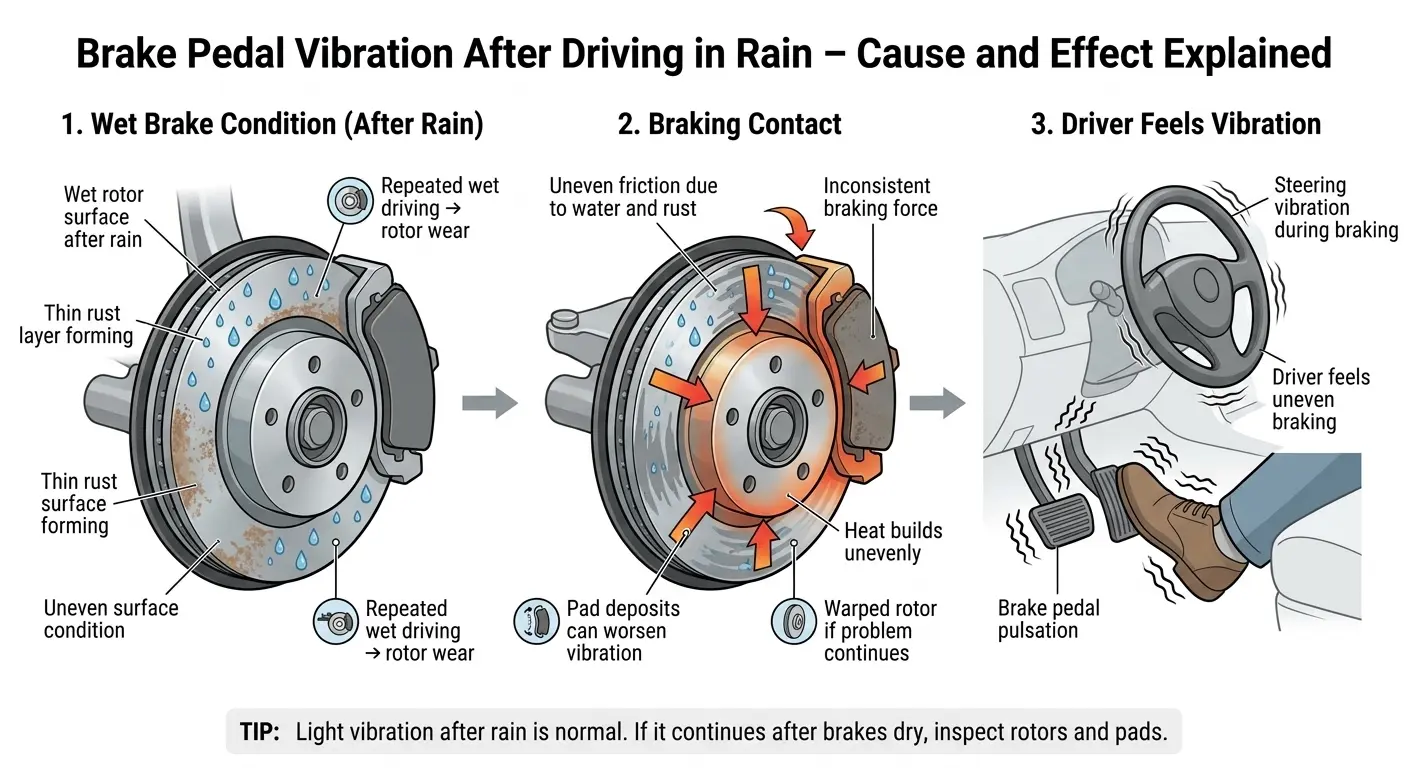
When you notice brake pedal vibration after driving in rain, it’s usually caused by a thin layer of water or rust forming on the brake rotors. This creates uneven friction when braking. In most cases, it’s temporary, but if it continues, it may point to warped rotors or uneven brake pad deposits.
Brake pedal vibration after driving in rain is one of those issues drivers often ignore because it sometimes disappears on its own. The problem is, not all vibration is harmless.
What feels like a small shake can be early evidence of uneven braking surfaces. Handle it wrong or ignore it too long, and you can turn a minor moisture issue into a full brake job.
Why does this problem happen?
Let’s break it down based on what actually happens inside real brakes.
When you drive through rain or water, your brake rotors get wet. That’s normal. But the moment you park or slow down, two things start happening:
1. Surface rust forms quickly
Brake rotors are bare metal. After rain, a thin rust layer forms within hours. The next time you brake, the pads hit that uneven surface.
2. Water creates uneven friction
When brakes are wet, the contact between pad and rotor isn’t smooth. Some areas grip harder, others slip slightly. That’s where the vibration starts.
3. Heat imbalance
Braking generates heat. If parts of the rotor are wetter than others, they heat unevenly. Over time, this can lead to slight warping.
This is why people often search for why do brakes vibrate when wet or car brake vibration after driving through water.
What symptoms do drivers often ignore?
Most drivers notice something feels off but assume it’s temporary.
Here’s what gets ignored:
Light vibration during the first few stops
Feels like a small pulse in the brake pedal. Many think it’s just water clearing off.
Slight steering wheel shake
Especially at low speeds. It disappears after a few minutes.
Rough braking feel
The brake doesn’t feel smooth, almost like it’s grabbing in pulses.
These are classic signs of brakes feel rough after driving in wet conditions.
Ignoring them becomes a problem when the vibration doesn’t go away after the brakes dry out.
What early warning signs appear before serious failure?
Before things get expensive, the car gives you subtle hints.
Sound
You may hear a light grinding or scraping noise during the first brake application after rain.
Feel
The brake pedal may pulse slightly under your foot, even with light pressure.
Smell
If moisture mixes with brake dust, you might notice a faint burnt or metallic smell.
Performance changes
Braking distance may increase slightly until the rotors dry out.
If these signs stick around, it’s no longer just moisture.
Is it safe to drive with this problem?
Short answer: Yes, if it’s brief and disappears quickly. No, if it continues.
Temporary vibration right after rain is normal. A few controlled brake applications usually clean the rotors.
But it becomes unsafe when:
- Vibration continues after 5–10 minutes of driving
- The steering wheel shakes during braking
- Braking feels inconsistent or weak
At that point, the issue may be rotor damage or uneven pad wear. That affects stopping performance.
How can this problem be diagnosed safely?
Start with simple checks before assuming the worst.
1. Test after drying the brakes
Drive at low speed and apply brakes gently a few times. If vibration disappears, it was likely moisture.
2. Visual rotor inspection
Look for rust patches or uneven surfaces on the brake discs.
3. Feel consistency
If the brake pedal still pulses after driving for a while, something is uneven.
When an OBD scanner helps
It usually doesn’t. Brake vibration is mechanical, not electronic.
What you should NOT attempt
Don’t remove brake components without proper tools and knowledge. Brakes are safety-critical.
What does this problem cost if ignored?
This is where small problems turn expensive.
If caught early:
- Cleaning or normal use clears the issue
- No cost or minimal inspection fee
If ignored:
- Rotor resurfacing or replacement
- Brake pad replacement
- Possible caliper issues from uneven wear
In real terms, a minor moisture issue can turn into a full brake job costing hundreds.
Labor often costs more than parts, especially if both rotors and pads need replacement.
How can this problem be prevented long-term?
You can’t avoid rain, but you can reduce the impact.
Use brakes lightly after driving through water
This helps dry the rotors quickly.
Avoid holding brakes after heavy rain driving
When you stop and hold the pedal, moisture gets trapped in one spot.
Drive the car regularly
Long parking periods after rain increase rust buildup.
Keep brake components in good condition
Worn pads and thin rotors are more sensitive to vibration.
These habits reduce cases of car shakes when braking after rain.
When is professional help necessary?
Some situations need a proper inspection.
Get the car checked if:
- Vibration continues in dry conditions
- Steering wheel shakes during braking
- You feel strong pulsation in the pedal
- Braking performance drops noticeably
These are signs of warped rotors or uneven pad deposits.
At that point, continuing to drive will only make the damage worse.
FAQ
Water on the brake rotors creates uneven friction when the pads make contact. This causes a temporary vibration. If the vibration continues after the brakes dry, it may indicate rotor warping or uneven pad wear.
Yes, but only briefly. It’s normal to feel slight vibration during the first few brake applications after driving in wet conditions. It should disappear quickly. If it doesn’t, the issue is no longer just moisture.
Not directly, but repeated exposure to uneven heating and cooling can lead to rotor distortion over time. If combined with worn pads or poor braking habits, the risk increases.