Transmission Slipping: Causes, Symptoms, Diagnosis and Fixes
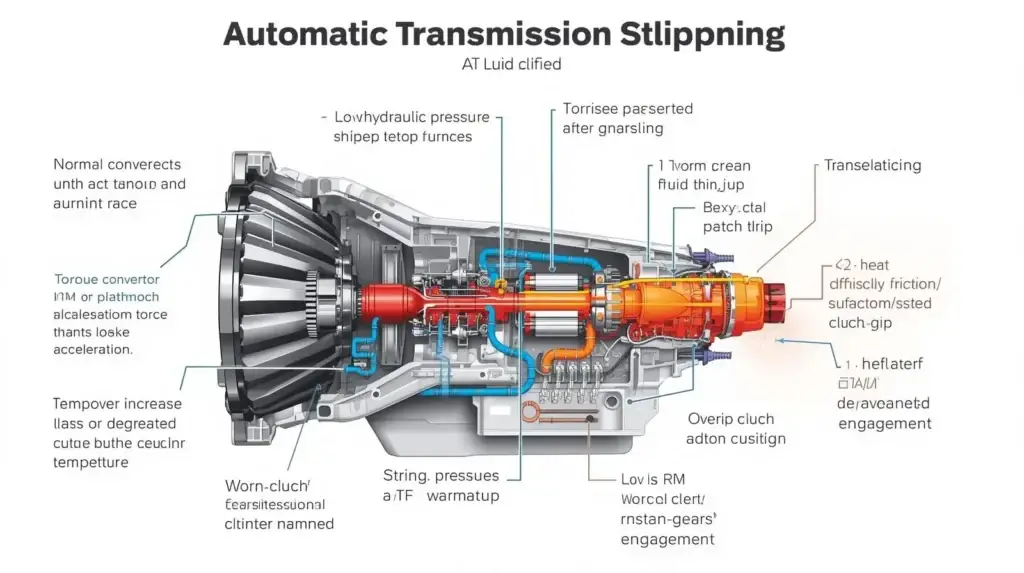
If you’re experiencing Transmission Slipping: Causes, Symptoms, Diagnosis and Fixes, the problem usually comes from low transmission fluid, worn clutch packs, valve body issues, failing solenoids, or internal transmission wear. A slipping transmission often causes delayed acceleration, RPM spikes, gear hesitation, or inconsistent shifting. Early diagnosis can prevent minor repairs from becoming a complete transmission rebuild.
A slipping transmission is one of those problems drivers often notice but hope will go away on its own. Unfortunately, it rarely does.
When a transmission begins slipping, it is no longer transferring engine power efficiently to the wheels. What starts as an occasional hesitation can quickly become a major drivability issue. Understanding Transmission Slipping: Causes, Symptoms, Diagnosis and Fixes can help you catch the problem before repair costs become painful.
Why does this problem happen?
In real-world repairs, transmission slipping usually happens because hydraulic pressure, friction materials, or electronic controls are no longer working together properly.
Low or Degraded Transmission Fluid
This is one of the most common causes.
Automatic transmissions rely on fluid pressure to engage gears. When fluid levels drop or the fluid becomes contaminated, clutch packs cannot hold properly, causing car transmission slipping under load.
Worn Clutch Packs
Inside an automatic transmission are friction discs that engage various gear sets.
After years of use, these clutch materials wear down. Once they lose their friction capability, slipping becomes noticeable during acceleration.
Faulty Shift Solenoids
Modern transmissions use electronic solenoids to control fluid flow.
A failing solenoid may prevent proper gear engagement, leading to inconsistent shifting and intermittent slipping.
Valve Body Problems
The valve body directs hydraulic fluid throughout the transmission.
Wear, contamination, or sticking valves can reduce pressure and create slipping conditions.
Torque Converter Issues
A worn torque converter can mimic transmission slipping symptoms by failing to transfer engine torque efficiently.
What symptoms do drivers often ignore?
Many drivers overlook early signs because the vehicle still moves.
Slight RPM Surges
The engine revs higher than normal without corresponding vehicle speed increase.
Many drivers dismiss this as normal behavior.
Delayed Gear Engagement
Shifting into Drive or Reverse may take an extra second or two.
This often signals hydraulic pressure loss.
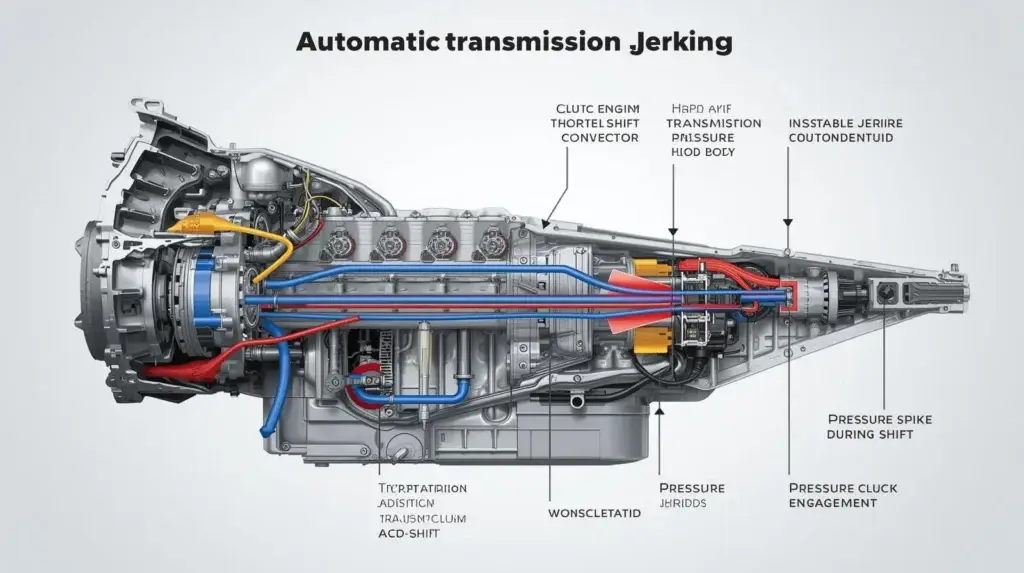
Occasional Hard Shifts
Inconsistent shifting patterns frequently appear before major failures.
Reduced Fuel Economy
A slipping transmission wastes energy and often increases fuel consumption.
Ignoring these early transmission slipping symptoms often results in more expensive repairs later.
What early warning signs appear before serious failure?
Most transmissions provide warning signs long before complete failure.
Sound
You may hear whining, humming, or unusual noises during gear changes.
Feel
The vehicle may hesitate before moving or feel like it briefly loses power while accelerating.
Smell
A burnt odor often indicates overheated transmission fluid.
Fresh transmission fluid has a mild oil smell. Burnt fluid has a sharp, unpleasant odor.
Performance Changes
You may notice:
- Delayed acceleration
- Unexpected downshifts
- Difficulty maintaining speed
- RPM fluctuations during steady driving
These are classic signs of automatic transmission slipping.
Is it safe to drive with this problem?
Only temporarily, and only if symptoms are mild.
A minor fluid-related issue may allow limited driving while awaiting inspection.
However, continued driving with active slipping creates excessive heat inside the transmission. Heat destroys clutch materials and contaminates the fluid.
Avoid driving if:
- RPM suddenly spikes
- The vehicle struggles to move
- Burnt transmission fluid smell is present
- Warning lights appear
The longer slipping continues, the more internal damage occurs.
How can this problem be diagnosed safely?
Start with the simplest checks first.
Check Transmission Fluid
Inspect:
- Fluid level
- Fluid color
- Burnt smell
- Visible contamination
Dark or burnt fluid often points toward internal wear.
Scan for Diagnostic Trouble Codes
An OBD scanner can reveal transmission-related codes involving:
- Shift solenoids
- Transmission control modules
- Speed sensors
Modern vehicles often store valuable fault information.
Observe Driving Conditions
Notice whether slipping occurs:
- During acceleration
- While climbing hills
- During cold starts
- Only when hot
This information helps narrow the diagnosis.
What Owners Should NOT Do
Avoid adding random transmission additives.
Many products temporarily mask symptoms without fixing the underlying cause.
Also avoid repeated hard acceleration testing, which increases heat and damage.
What does this problem cost if ignored?
This is where early action matters most.
Low-Cost Repairs
If caught early:
- Transmission fluid service
- Filter replacement
- Minor electrical repairs
- Solenoid replacement
These repairs are often relatively affordable.
Moderate Repairs
Costs increase when:
- Valve body repairs become necessary
- Multiple solenoids fail
- Torque converter issues develop
Expensive Repairs
Ignoring transmission slipping when accelerating can eventually require:
- Complete transmission rebuild
- Transmission replacement
- Torque converter replacement
- Internal clutch pack replacement
What begins as a fluid issue can easily become a multi-thousand-dollar repair.
How can this problem be prevented long-term?
Good transmission health is largely maintenance-driven.
Service Fluid on Schedule
Many failures begin with neglected fluid maintenance.
Avoid Excessive Heat
Heat is the biggest enemy of automatic transmissions.
Heavy towing, aggressive driving, and prolonged slipping increase temperatures dramatically.
Address Small Symptoms Early
Minor shift irregularities often appear months before major failure.
Use Correct Fluid
Always use manufacturer-approved transmission fluid.
Incorrect fluid can cause shift quality issues and premature wear.
When is professional help necessary?
Some situations require immediate professional diagnosis.
Seek professional help when:
- Slipping occurs consistently
- Burnt fluid smell develops
- Transmission warning lights appear
- Vehicle struggles to accelerate
- Gear engagement becomes delayed
Professional shops can perform:
- Line pressure testing
- Advanced scan tool diagnostics
- Solenoid testing
- Valve body inspection
These procedures accurately identify the root cause.
FAQ
When acceleration demand increases, the transmission requires maximum clutch holding force. Low fluid, worn clutch packs, faulty solenoids, or pressure loss can prevent proper engagement. This causes engine RPM to rise faster than vehicle speed. The condition usually worsens if left untreated.
Yes. Low fluid is one of the most common causes of transmission slipping. Automatic transmissions rely on hydraulic pressure to engage gears. When fluid levels drop, clutch packs cannot fully engage, leading to delayed shifts and slipping. Checking fluid condition should always be one of the first diagnostic steps.
There is no safe mileage estimate because the severity varies. Some vehicles may continue operating for weeks, while others can fail within days. Every mile driven with active slipping increases internal heat and wear. Diagnosing the issue quickly is the safest approach.
Transmission slipping is rarely a problem that fixes itself. In most cases, it starts with fluid issues, electronic faults, or early internal wear and gradually becomes more serious over time.
The good news is that many slipping transmissions can be repaired at a reasonable cost when caught early. Pay attention to RPM surges, delayed shifts, unusual smells, and acceleration problems. Diagnosing the cause promptly gives you the best chance of avoiding a rebuild and keeping your transmission operating reliably for years to come.