Car Loses Power When Accelerating Uphill
When a car loses power while accelerating uphill, it usually means the engine cannot produce enough torque under load. The most common real causes are restricted airflow or fuel delivery, ignition problems, transmission not downshifting properly, or engine sensors giving incorrect load data. The issue often stays hidden on flat roads but shows up immediately on hills.
Here’s why this matters. Driving uphill puts maximum demand on your engine, transmission, and fuel system all at once. Small problems you never notice on flat roads suddenly become obvious. Many drivers ignore it because the car still “runs fine” most of the time. That mistake often turns a cheap fix into a costly repair later.
Let’s break down what’s really happening.
Why does a car lose power when accelerating uphill?
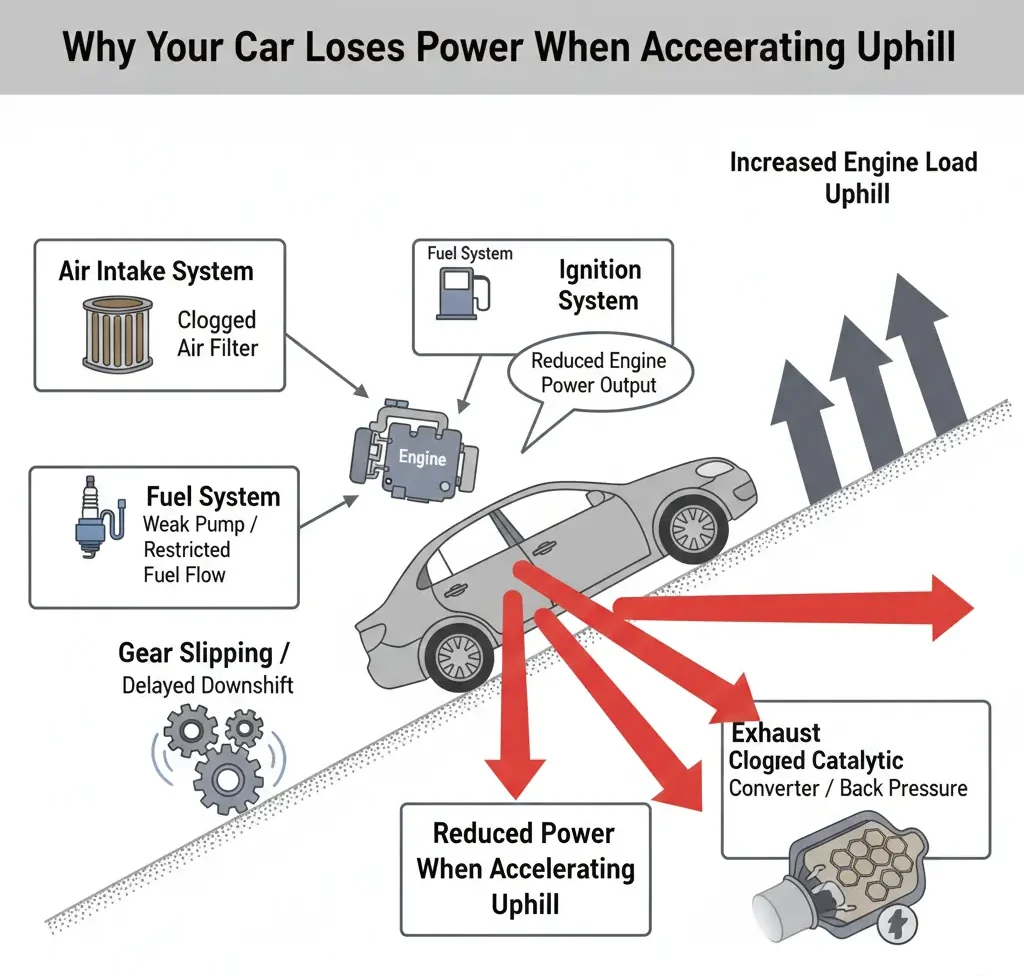
Uphill acceleration increases engine load dramatically. If any system supporting combustion or torque delivery is weak, power drops fast.
Restricted air intake or exhaust
Engines need more air when climbing. A dirty air filter, collapsing intake hose, or clogged catalytic converter limits airflow. On level roads, the engine can compensate. On a hill, it cannot. The result feels like the engine is being held back.
Fuel delivery problems
Under load, fuel demand rises. Weak fuel pumps, partially clogged fuel filters, or failing injectors cannot keep up. The engine leans out, power falls, and hesitation appears. This is one of the most common causes I see in real diagnostics.
Ignition breakdown under load
Worn spark plugs, weak coils, or cracked plug wires may work fine cruising. Under uphill load, cylinder pressure rises and weak ignition components fail to fire consistently. The engine feels flat or starts to misfire.
Transmission not responding correctly
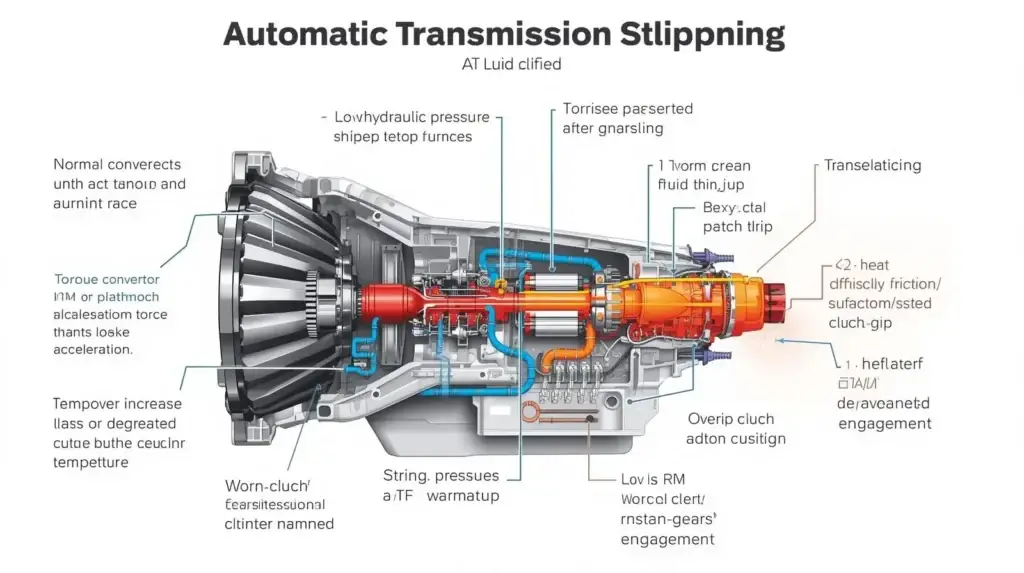
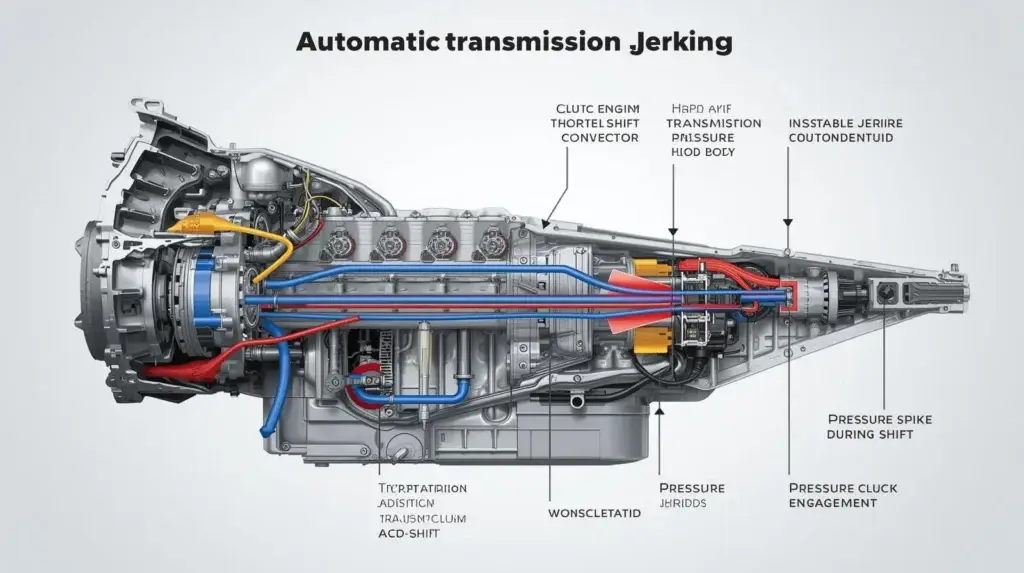
Automatic transmissions should downshift on hills. If they don’t, the engine stays in too high a gear and bogs down. Low transmission fluid, slipping clutches, or faulty shift solenoids can all cause this.
Sensor data problems
The engine relies on throttle position, MAF, MAP, and oxygen sensors to calculate load. If any send inaccurate data, the engine control unit limits power to protect itself. You press the pedal, but the engine does not respond properly.
Common symptoms people often ignore
Drivers usually dismiss these signs at first:
- Car feels fine on flat roads but struggles uphill
- Engine revs increase but speed barely rises
- Delayed downshift or no downshift at all
- Mild shaking or hesitation under heavy throttle
Ignoring these symptoms allows heat, stress, and wear to build across multiple systems.
Early warning signs you should not ignore
Before power loss becomes obvious, subtler clues appear:
- Slight drop in fuel economy
- Occasional hesitation when merging
- Engine sounds louder or strained uphill
- Check engine light comes on briefly under load
These are early warnings. Catching the problem here saves money.
Is it safe to drive?
Short answer: Sometimes, but it depends on the cause.
If the issue is mild and occasional, you can usually drive carefully. Avoid hard acceleration and steep grades. If power loss is severe, sudden, or paired with misfires or warning lights, driving becomes unsafe and can damage the engine or transmission quickly.
How to diagnose the problem safely
Start simple. You do not need to guess.
Checks you can do yourself
- Inspect the air filter and intake hoses
- Listen for exhaust rattling or restriction sounds
- Check for overdue spark plugs or maintenance
- Note whether the transmission downshifts uphill
When an OBD scanner helps
Scan for stored or pending codes, even if the light is off. Fuel trim, misfire, and load-related codes point directly to the problem.
What not to do
Do not replace parts blindly. Do not keep forcing the car uphill at full throttle. That only increases damage and diagnostic confusion.
Cost implications (cheap fixes vs expensive mistakes)
Cheap if caught early
- Air filter replacement
- Spark plugs or ignition coils
- Fuel filter
- Minor sensor cleaning or replacement
Expensive if ignored
- Burned catalytic converter
- Damaged transmission clutches
- Overheated engine components
- Injector or fuel pump failure
Small restrictions become big failures under load.
How to prevent this problem long-term
- Replace air and fuel filters on schedule
- Use the correct fuel grade recommended by the manufacturer
- Service transmission fluid regularly
- Address check engine lights immediately
- Do not ignore drivability changes just because the car still moves
Engines fail slowly before they fail suddenly.
When professional help is necessary
You need a professional diagnosis if:
- Power loss is getting worse
- The check engine light stays on
- The transmission refuses to downshift
- Misfires occur under load
- Fuel trim or load codes keep returning
These require live data analysis and load testing, not guesses.
FAQ
Hills increase engine load significantly. Problems with airflow, fuel delivery, ignition strength, or transmission response only show up when the engine is stressed. Flat roads simply do not demand enough power to expose the issue. This is why many drivers miss the early warning signs.
Yes. Low or degraded transmission fluid can prevent proper downshifting and cause clutch slippage. The engine works harder but cannot transfer torque efficiently to the wheels. This feels exactly like engine power loss, even though the engine itself may be fine.
Yes, over time. Constant uphill strain with reduced power overheats components and accelerates wear. What starts as a minor drivability issue can turn into engine, transmission, or exhaust system damage if ignored.
Conclusion
When a car loses power when accelerating uphill, the engine is telling you it cannot handle load the way it should. The cause is usually straightforward and mechanical, not mysterious. Diagnose it early, fix the restriction or weakness, and the car will regain its strength. Ignore it, and the repair cost always climbs faster than the road.