Spongy Brake Pedal: Causes, Symptoms, Diagnosis and Fixes
A spongy brake pedal usually means there is air in the brake system, contaminated brake fluid, an internal master cylinder problem, or a hydraulic leak. The issue reduces braking efficiency and can increase stopping distance. If the brake pedal feels soft, sinks unusually low, or requires pumping, the system should be inspected as soon as possible.
A Spongy Brake Pedal is one of the most common brake complaints drivers experience, yet many people underestimate how serious it can become. A brake pedal should feel firm and predictable. When it feels soft or spongy, something inside the hydraulic braking system is no longer working correctly.
The danger is that the problem often develops gradually. Drivers adapt to it without realizing braking performance is getting worse. Ignoring a soft brake pedal can eventually lead to longer stopping distances, expensive repairs, and in severe cases, loss of braking confidence during emergency situations.
Why Does This Problem Happen?
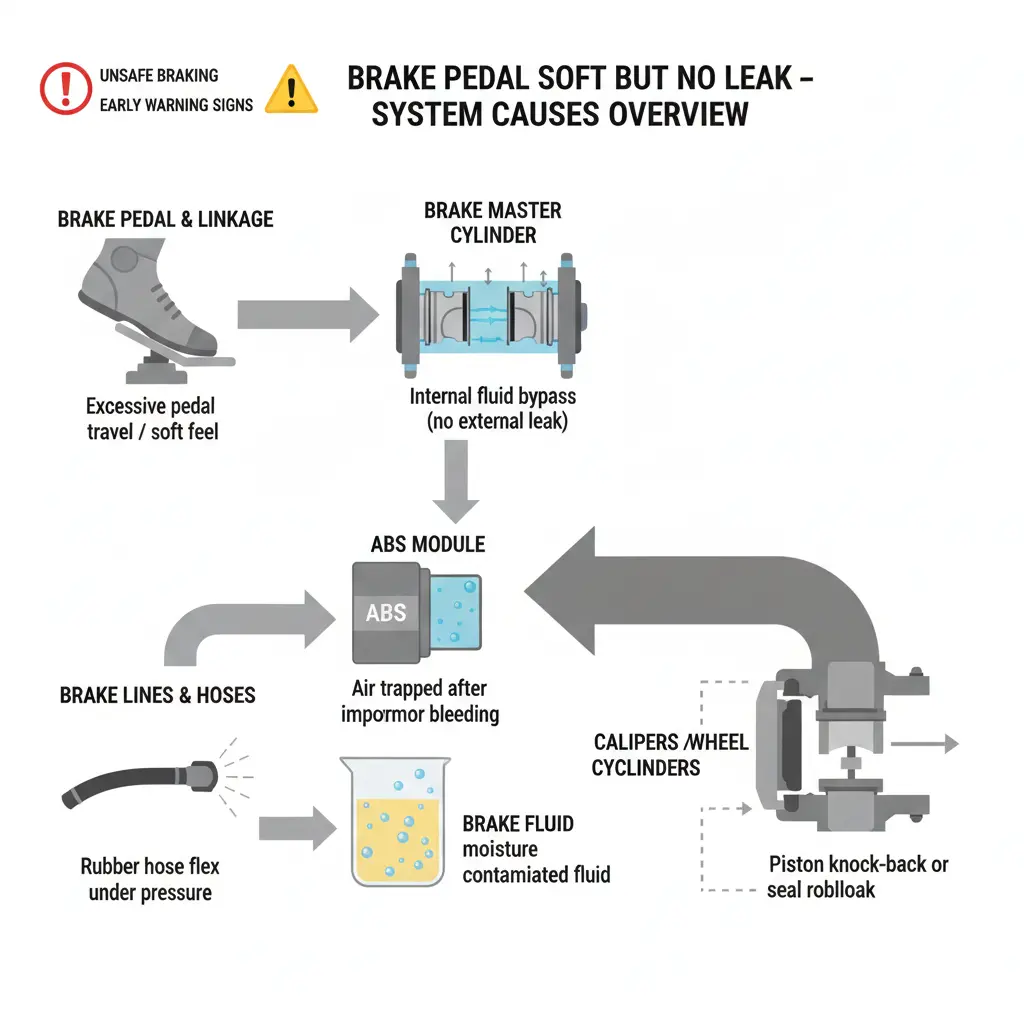
In real-world repair shops, a spongy brake pedal almost always points to a hydraulic issue.
The most common cause is air trapped inside the brake lines. Unlike brake fluid, air compresses. When you press the pedal, some of the force compresses the air instead of applying the brakes.
Old or contaminated brake fluid is another frequent cause. Brake fluid naturally absorbs moisture over time. As water content increases, the fluid becomes less effective and can create a soft pedal feel.
A worn master cylinder can also create problems. Internal seals may allow brake fluid to bypass inside the cylinder, reducing hydraulic pressure without creating an external leak.
Other causes include:
- Brake fluid leaks
- Flexible brake hoses expanding under pressure
- Faulty ABS hydraulic units
- Improper brake bleeding procedures
- Damaged calipers or wheel cylinders
In many cases, multiple issues exist at the same time, especially on older vehicles.
What Symptoms Do Drivers Often Ignore?
Many drivers continue driving because the vehicle still stops.
That assumption often leads to bigger repair bills.
Common symptoms include:
- Brake pedal feels softer than normal
- Pedal travels lower before brakes engage
- Vehicle requires more distance to stop
- Brake pedal improves after pumping
- Reduced confidence during hard braking
- Inconsistent brake feel
These symptoms may seem minor at first. However, they indicate the braking system is losing efficiency.
A driver may unconsciously press harder on the pedal to compensate. The problem often remains unnoticed until a sudden emergency stop is required.
What Early Warning Signs Appear Before Serious Failure?
Several subtle warning signs usually appear before braking performance becomes seriously compromised.
Sound
- Occasional hissing near the brake pedal
- Unusual hydraulic noises
- ABS pump noises occurring more frequently
Feel
- Slightly longer pedal travel
- Soft brake response during initial application
- Pedal gradually sinking under steady pressure
Smell
- Burnt brake fluid smell
- Hot brake odor after normal driving
Performance Changes
- Delayed brake response
- Reduced braking consistency
- Vehicle pulling slightly during braking
These early signs often appear weeks or months before major failures occur.
Is It Safe to Drive With This Problem?
A spongy brake pedal should never be considered normal. Short trips may be possible in some cases, but continued driving carries increasing risk.
If braking performance remains strong and the issue is minor, driving a short distance to a repair facility may be acceptable.
However, the situation becomes dangerous when:
- The brake pedal goes to floor
- Stopping distance increases noticeably
- Brake warning lights appear
- Fluid level drops repeatedly
- Pedal requires constant pumping
A good rule is simple. If you cannot predict how the brake pedal will respond every time you press it, the vehicle should be inspected immediately.
How Can This Problem Be Diagnosed Safely?
Several safe checks can be performed at home.
Check Brake Fluid Level
Inspect the brake fluid reservoir. Low fluid levels often indicate leaks or brake component wear.
Inspect Fluid Condition
Healthy brake fluid is usually clear or light amber. Dark, contaminated fluid may contribute to a soft brake pedal.
Look For External Leaks
Check:
- Brake lines
- Calipers
- Wheel cylinders
- Master cylinder area
Pedal Hold Test
With the engine running, apply steady pressure to the brake pedal.
If the pedal slowly sinks, an internal hydraulic problem may exist.
When an OBD Scanner Helps
An OBD scanner can help identify ABS-related faults when warning lights are present.
What Owners Should NOT Attempt
Avoid:
- Opening ABS hydraulic systems without proper tools
- Driving with severely reduced braking performance
- Guessing and replacing random parts
Brake systems are safety-critical systems. Incorrect repairs can create dangerous situations.
What Does This Problem Cost If Ignored?
The financial difference between early and late repairs can be significant.
Early Repairs
- Brake fluid flush
- Brake bleeding
- Minor leak repair
These repairs are generally inexpensive.
Moderate Repairs
- Brake hose replacement
- Caliper replacement
- Wheel cylinder replacement
Costs begin increasing due to labor requirements.
Major Repairs
- Master cylinder replacement
- ABS hydraulic unit replacement
- Multiple brake component failures
At this stage, labor often exceeds the cost of the parts themselves.
A small amount of air in the system today can become a complete hydraulic repair later if ignored.
How Can This Problem Be Prevented Long-Term?
Most brake pedal problems are preventable.
Practical prevention steps include:
- Replace brake fluid at recommended intervals
- Inspect brake components during routine service
- Repair leaks immediately
- Use manufacturer-approved brake fluid
- Avoid mixing fluid types
- Perform proper bleeding procedures after repairs
Regular brake inspections catch small issues before they affect braking performance.
Vehicles that receive routine brake fluid service generally experience fewer hydraulic failures over time.
When Is Professional Help Necessary?
Professional diagnosis becomes necessary when:
- The brake pedal goes to floor
- Fluid leaks are visible
- Brake warning lights remain on
- ABS faults are present
- Pedal remains soft after proper bleeding
- Master cylinder failure is suspected
Modern braking systems can be complex. Many ABS-equipped vehicles require specialized bleeding procedures and diagnostic equipment.
Continuing to drive with a severe hydraulic fault can eventually result in brake failure and significantly higher repair costs.
FAQ
A brake pedal soft after bleeding often means air remains trapped somewhere in the system. This is common when bleeding procedures are performed in the wrong order or when ABS components contain trapped air. In some cases, a failing master cylinder creates symptoms that resemble trapped air. Re-bleeding the system correctly usually confirms the cause. If the pedal remains soft, further diagnosis is necessary.
Yes. A brake pedal soft but no leak condition often points to internal master cylinder seal failure or trapped air. The hydraulic pressure may bypass internally without producing an external fluid leak. Contaminated brake fluid can also contribute to the problem. A sinking pedal during a hold test is often a strong indicator of internal hydraulic failure.
A brake pedal goes to floor condition is usually caused by a major hydraulic failure. Common causes include severe fluid leaks, failed master cylinders, damaged brake lines, or significant air entering the system. The problem should be treated as a safety concern immediately. The vehicle should not be driven until the braking system has been inspected and repaired.
A Spongy Brake Pedal is more than an annoyance. It is a warning that the hydraulic braking system is no longer operating as designed. Whether the cause is trapped air, contaminated fluid, a failing master cylinder, or a hidden leak, the issue rarely improves on its own.
The smartest approach is to diagnose the problem early, repair it before braking performance deteriorates further, and maintain the brake system regularly. A firm, predictable brake pedal is one of the most important safety features any vehicle can have.