Car Revving But Not Accelerating? Automatic Transmission Slipping Causes, Fixes & Warning Signs
Car revving but not accelerating is a common problem where the engine RPM increases but the vehicle does not gain speed properly. Many drivers notice the car revving but not accelerating especially under load, during overtaking, or after the transmission warms up. This issue usually points to transmission slipping, fluid problems, or internal wear that will get worse if ignored.
🔧 Car Revving But Not Accelerating — What It Really Means
When the engine revs but the car does not accelerate properly, power is not being transferred efficiently from the engine to the wheels. In automatic cars, this usually points to transmission slipping.
At low speeds, it may feel like delayed movement. Under acceleration, it feels like the engine is working but the car is not responding. Many drivers notice this problem more when the car is hot or climbing hills.
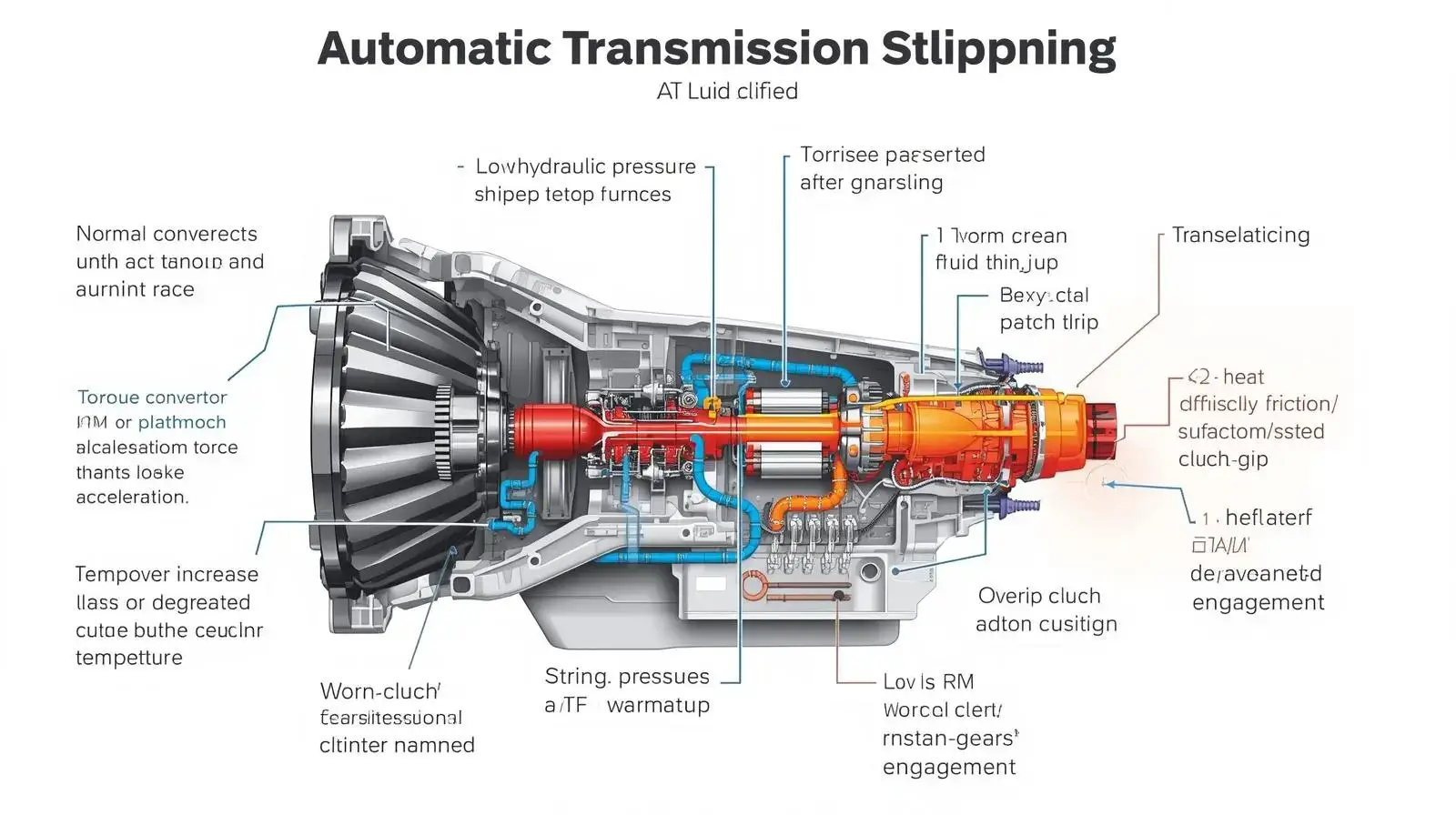
🔧 Why Automatic Transmission Slipping Happens
Automatic transmissions depend on fluid pressure, friction, and heat control. When any of these fail, slipping begins.
Low or Degraded Transmission Fluid
The most common cause.
Low fluid reduces pressure. Worn or burnt fluid loses friction.
Result: engine revs increase but acceleration is weak.
Overheating
Heat breaks down transmission fluid.
That’s why many people notice:
👉 transmission slipping after warm up
👉 worse performance in traffic
Worn Clutch Packs or Bands
Internal clutch plates wear over time.
When worn:
- they cannot hold torque
- slipping appears under acceleration
Faulty Solenoids or Valve Body
Modern transmissions rely on hydraulic control.
If pressure becomes inconsistent:
- delayed shifting
- slipping under load
Torque Converter Problems
If the torque converter fails:
- power transfer becomes inefficient
- car feels slow during takeoff
⚠️ Common Symptoms People Ignore
- Engine revs high but car accelerates slowly
- Delay when shifting gears
- Slipping during uphill driving
- Worse performance when hot
- Slight vibration or shudder
These are early warnings, not minor issues.
🚨 Early Warning Signs You Should Not Ignore
Transmission Overheating Symptoms
- Burnt smell
- Dark or black transmission fluid
- Warning light after long driving
Behavior Changes
- Soft or delayed gear shifts
- Hesitation when accelerating
- Inconsistent downshifts
🔍 Transmission Slipping When Hot Only — Why It Happens
Many drivers report the car feels normal when cold but starts slipping after 20–30 minutes.
This happens because:
- heat reduces fluid effectiveness
- worn components lose grip under temperature
👉 This is a strong sign of internal wear.
🧪 Safe Diagnostic Steps You Can Do
Check Transmission Fluid
Look for:
- proper level
- clean red color
- no burnt smell
Observe When Slipping Happens
- Only when hot → heat issue
- Only under load → worn clutches
- Always → serious internal problem
Scan for Trouble Codes
Even without warning lights, stored codes can reveal:
- solenoid issues
- temperature problems
💸 Cost: Cheap Fix vs Expensive Damage
Cheap (if caught early)
- Fluid change
- Filter replacement
Moderate
- Solenoid repair
- Valve body service
Expensive
- Full transmission rebuild
- Replacement
Most expensive repairs start from ignored early signs.
🛠️ What Actually Fixes It
Works
- Correct fluid type and level
- Cooling system maintenance
- Replacing worn internal parts
Doesn’t Work
- Additives claiming quick fixes
- Overfilling fluid
- Ignoring symptoms
🛡️ How to Prevent Transmission Slipping
- Change fluid regularly
- Avoid overheating
- Don’t overload the vehicle
- Fix small issues early
⚠️ When You Need a Professional
Get help if:
- slipping happens consistently
- burnt smell is present
- warning lights appear
- acceleration becomes unsafe
FAQ
Short distances, maybe. Long-term, no. Slipping creates heat, and heat causes rapid internal damage.
Heat reduces fluid effectiveness and exposes worn components. That’s why AT slips at high temperature is common.
Only if fluid condition is the root cause. If clutches are worn, fluid won’t save them.